AI Cold Calling: What Really Happens When You Let AI Dial First (And Why It Works)


AI cold calling sounds like something straight out of a sci-fi movie, but it's already happening in sales teams everywhere, and the results are honestly surprising. If you're picturing a robotic voice awkwardly reading a script, you're thinking of the old automated calls everyone hates.
This is different, and it's solving one of the biggest problems in sales, the fact that cold calling is soul crushing work that burns out even your best reps.
Let's be honest about cold calling. Most calls go to voicemail. Most conversations end in rejection. Your sales team spends hours dialing numbers, leaving messages, and getting hung up on, all to connect with maybe a handful of interested prospects.
It's inefficient, expensive, and demoralizing. But what if AI could handle the grinding, repetitive part, filtering through the noise to find people actually worth talking to?
That's exactly what's happening. Sales teams are using AI to make the first contact, qualify leads, and only loop in human reps when there's genuine interest. It's not about replacing salespeople. It's about letting them focus on what they're actually good at, closing deals and building relationships, instead of burning hours on dead end calls.
What is AI Cold Calling?
AI cold calling is technology that uses artificial intelligence to initiate and conduct initial sales outreach calls without human involvement. Instead of your sales rep manually dialing a list of numbers, AI systems handle the calls, navigate conversations, ask qualifying questions, and determine which prospects are worth human follow up.
These systems use natural language processing to understand responses, voice synthesis to sound natural and conversational, and machine learning to improve over time. The AI can handle objections, answer basic questions, schedule appointments, and even detect when someone's interested versus just being polite.
Here's what separates modern AI cold calling from those annoying robocalls you despise. The technology adapts to each conversation. If someone says they're busy, the AI offers to call back later. If they have questions, it provides relevant information.
If they're interested, it immediately connects them to a human rep or books a meeting. It's dynamic, not just a pre recorded message blasting through a script.
The goal isn't to trick people into thinking they're talking to a human. Good implementations are upfront about being AI while still providing value. Think of it as a smart filter that separates hot leads from time wasters, so your human team talks to people who actually want to talk.
Benefits of AI Cold Calling
The advantages go beyond just making more calls, though that's definitely part of it. Sales teams using ai cold calling are seeing fundamental shifts in how they operate and what they accomplish.
Volume and consistency are the obvious wins. An AI system can make hundreds or thousands of calls per day without getting tired, discouraged, or needing coffee breaks. While your human reps are in meetings or closing deals, the AI is continuously working through your prospect list. It never has a bad day, never loses motivation after the twentieth rejection, and never gets sick.
Cost efficiency is massive. Hiring, training, and maintaining a large cold calling team is expensive. High turnover means you're constantly recruiting and retraining. With ai cold calling, you can accomplish more outreach with a smaller human team, redirecting budget toward closers instead of dialers.
Companies using solutions like Callers.ai report cutting outreach costs by 60% or more while actually increasing their connection rates.
Lead qualification gets way better too. AI follows consistent criteria for every single call, asking the same qualifying questions and applying the same standards. Human reps might skip questions when they're rushed, make judgment calls based on gut feeling, or let personal biases affect their assessment. AI evaluates every prospect objectively based on the data.
Your human reps focus on high value activities. Instead of spending 80% of their day on calls that go nowhere, they spend time with qualified prospects who already expressed interest. This isn't just better for productivity, it's better for morale. Sales reps didn't get into sales to leave voicemails all day. They want to have real conversations and close deals.
Data and insights improve dramatically. Every call gets recorded, transcribed, and analyzed. You can see exactly which scripts work, which objections come up most often, which times of day get the best response rates, and which prospect characteristics predict actual interest. This feedback loop helps you constantly improve your entire sales process.
Challenges of AI Cold Calling
Now let's talk about the real problems, because implementing this technology isn't just plug and play success.
The initial setup and training require serious effort. You can't just turn on ai cold calling and expect great results immediately. The system needs to learn your products, understand your ideal customer profile, master your value propositions, and know how to handle common objections. This training period takes time, patience, and a lot of fine tuning.
Voice quality and naturalness still aren't perfect. While AI voices have gotten incredibly good, they're not 100% indistinguishable from humans yet. Some prospects will pick up on it immediately, and some will be turned off by talking to AI. You need to decide whether to be upfront about it or let the conversation flow naturally, and both approaches have tradeoffs.
Regulatory compliance is tricky and serious. Cold calling has strict rules about consent, do not call lists, recording notifications, and more. When you add AI into the mix, you're navigating additional complexity around automated calls and data privacy.
Messing this up can result in massive fines and legal problems. You absolutely need expert guidance on compliance before launching any ai cold calling program.
There's a learning curve for your existing team. Sales managers need to learn how to work with AI tools, optimize scripts, interpret analytics, and train the system. Sales reps need to adjust their workflows to handle warm leads coming from AI instead of cold prospects they found themselves. This transition period can be bumpy if not managed carefully.
Not every prospect responds well to AI outreach. Some industries, price points, or customer segments expect personal attention from the start. High value enterprise deals probably shouldn't begin with an AI call. You need to think strategically about where ai cold calling fits in your overall sales strategy rather than applying it everywhere blindly.

Best Practices for Using AI Cold Calling
Getting this right requires more than just buying software. Here's what actually works based on teams successfully using this technology.
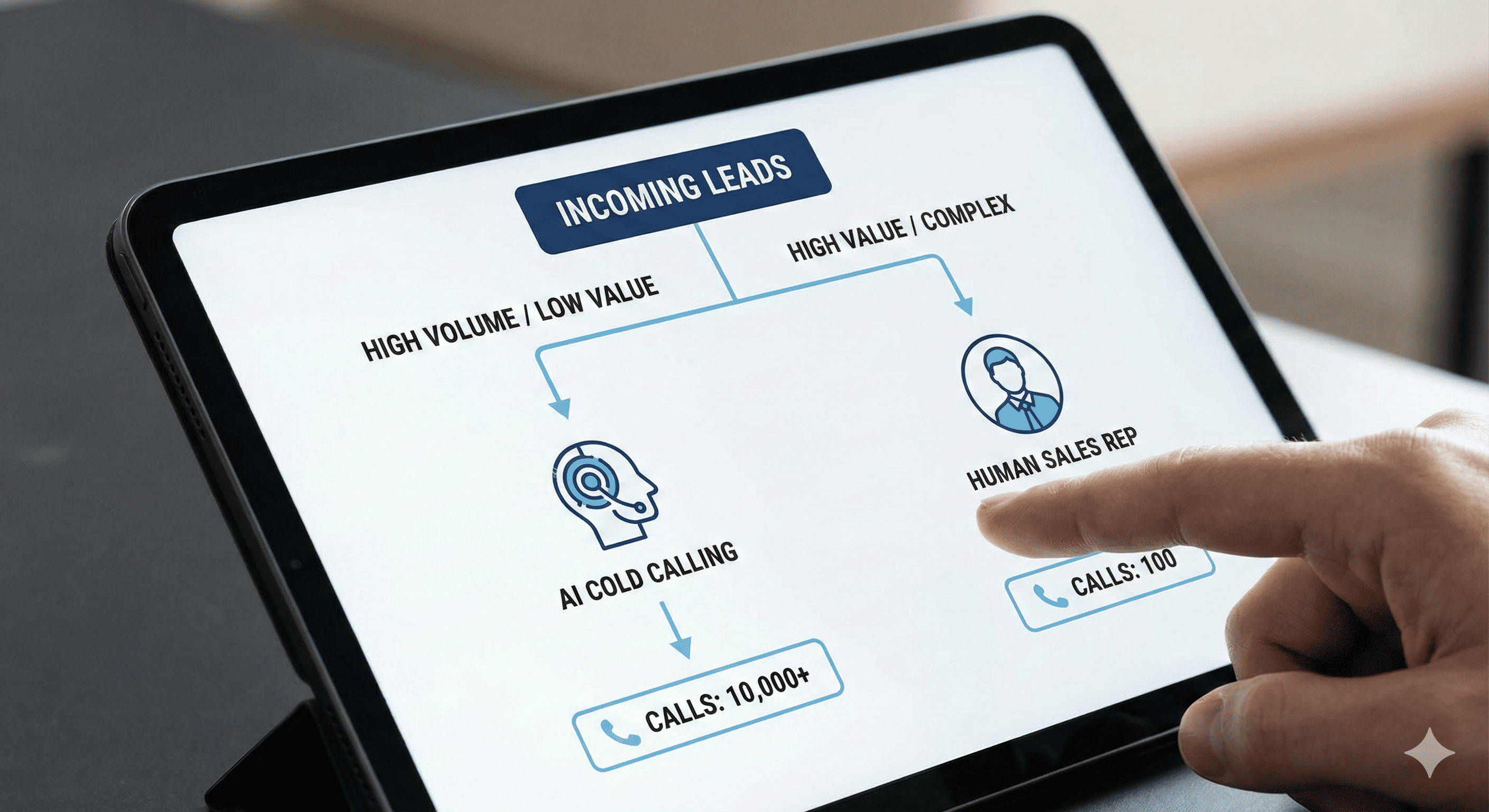
Be strategic about which prospects get AI call agents versus human calls. Use ai cold calling for high volume, lower value prospects where you need to filter through lots of possibilities to find interested parties.
Save human outreach for strategic accounts, warm referrals, or prospects with high lifetime value potential. The key is matching the approach to the opportunity.
Start with clear, specific goals for your ai cold calling program. Are you trying to book meetings, qualify leads, gather information, or something else? Design your scripts and training around those specific outcomes. Vague goals lead to vague results and wasted effort.
Test and iterate constantly. Your first script won't be your best script. Try different opening lines, value propositions, qualifying questions, and call to actions. Use the data to see what actually moves prospects forward. Small changes in wording can create surprisingly big differences in response rates.
Keep humans in the loop for complex conversations. When ai cold calling encounters questions it can't handle confidently, objections that need creative solutions, or prospects who clearly prefer human interaction, have a smooth handoff process ready. The worst experience is when someone wants to talk to a person and gets stuck in an AI loop with no escape.
 Train your system on real conversations from your best reps. The AI should reflect what works in your market, not generic sales techniques. Feed it recordings of successful calls, winning scripts, and effective objection handling from your top performers. This makes the AI an extension of your best practices, not a replacement for them.
Monitor quality and customer reactions religiously. Listen to calls regularly, track complaint rates, watch for prospects who hang up immediately, and pay attention to feedback. If you're getting pushback or poor results, adjust quickly. Stubbornly sticking with an approach that's annoying people will damage your brand.
Integrate ai cold calling with your CRM and sales tools seamlessly. The AI should automatically log calls, update lead status, schedule follow ups, and pass detailed notes to human reps. Disconnected systems create chaos and missed opportunities. Everything should flow together smoothly.
Be transparent and ethical. If regulations require disclosure that it's an AI call, comply fully. Even if not required, consider being upfront. Many prospects appreciate the honesty and efficiency. Trying to trick people usually backfires eventually.
Measuring Success and ROI
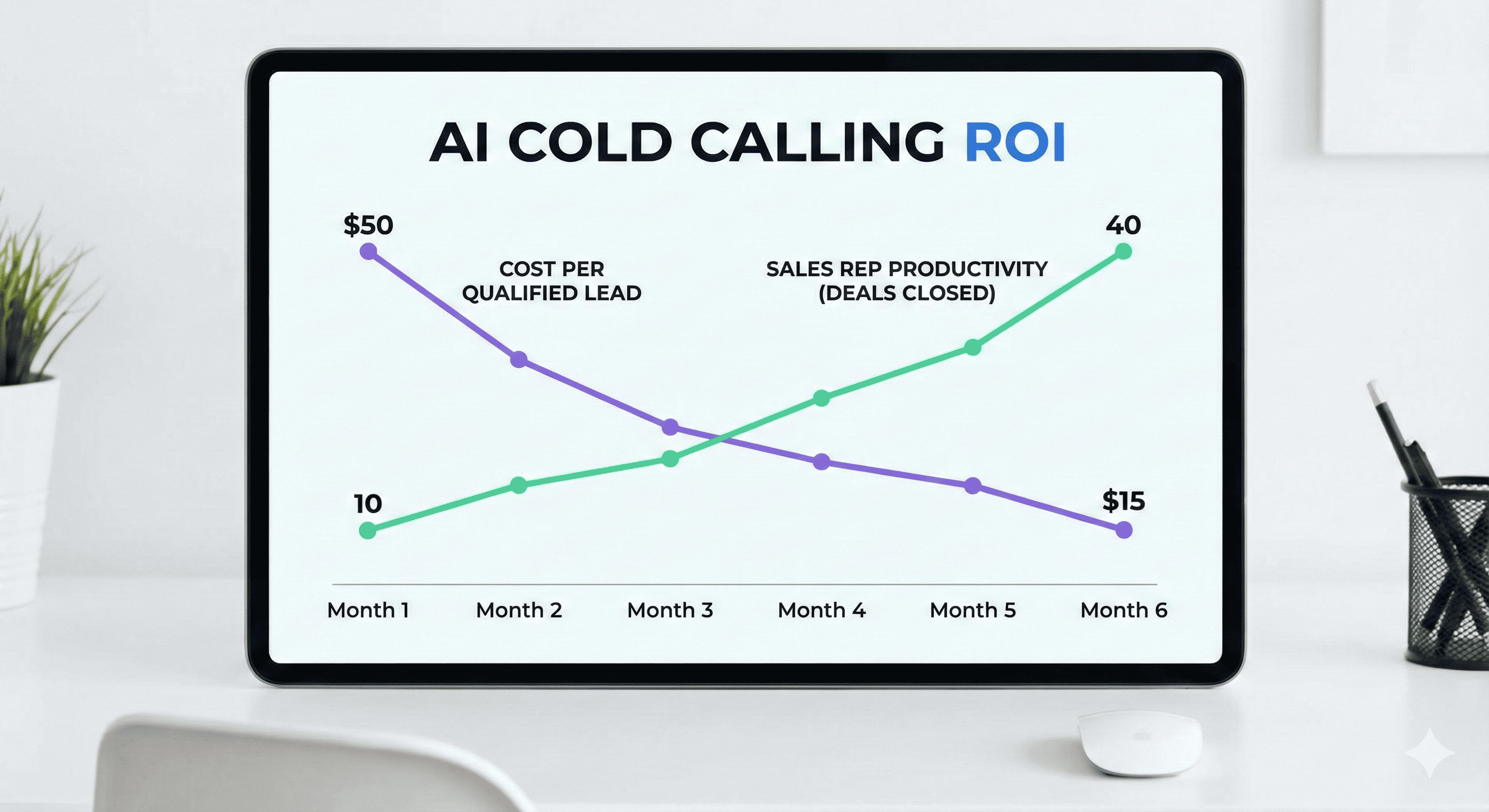
Track the metrics that actually matter for your business. Connection rate, qualification rate, cost per qualified lead, and conversion rate from AI qualified lead to closed deal are the key numbers. Don't just count total calls made, measure the business outcomes.
Compare results over time rather than expecting instant perfection. Month one might feel rough as you work out kinks. Month three should show clear improvement. Month six is where you really see the ROI kick in as the system learns and you optimize based on data.
Calculate the time savings for your human team. If your reps used to spend 20 hours a week on cold outreach and now spend 5, what are they doing with those extra 15 hours? If they're closing more deals or building deeper client relationships, that's where the real value shows up.
Conclusion
The sales landscape is changing, and teams that adapt to ai cold calling are gaining serious advantages over those still grinding through manual dialing. This isn't about replacing human salespeople. It's about giving them superpowers, letting AI handle the tedious, repetitive work so humans can focus on what they do best, building relationships and closing deals.
Yes, there's a learning curve. Yes, you need to invest time in setup and training. Yes, you'll face challenges around compliance, quality, and team adaptation. But teams pushing through those challenges are seeing lower costs, better lead quality, higher rep productivity, and ultimately more revenue.
The key is approaching this strategically, not just as a cost cutting measure but as a way to fundamentally improve how your sales team operates. Use AI where it excels at scale, consistency, and filtering. Keep humans where they excel at relationships, creativity, and closing.
If you're still relying purely on human cold calling, you're competing with one hand tied behind your back. Your competitors are already making this shift, reaching more prospects with less effort and converting leads more efficiently. The question isn't whether ai cold calling works anymore. It's how quickly you can implement it effectively before you fall too far behind.
Frequently Asked Questions (FAQs)
1. Does AI cold calling actually sound natural or do people hang up immediately?
Modern AI voices have improved dramatically and most people don't immediately recognize them as AI, especially in the first 30 seconds of a call. That said, some prospects will figure it out, and that's fine.
The key is providing value quickly, whether they realize it's AI or not. If your message is relevant and the AI handles the conversation smoothly, most people engage normally.
2. Is AI cold calling legal and what regulations do I need to worry about?
Yes, it's legal, but you must comply with regulations like the Telephone Consumer Protection Act, do not call lists, and state specific laws. You typically need consent for automated calls, must identify yourself properly, and have to respect opt out requests immediately.
Different industries and regions have different rules. Always work with a legal expert to ensure compliance before starting any program.
3. How much does it cost to implement AI cold calling?
Costs vary widely based on call volume, features, and providers. Small operations might spend a few hundred dollars monthly for basic services, while enterprise implementations can run several thousand.
However, this is almost always cheaper than hiring additional human cold callers when you factor in salaries, benefits, training, and turnover costs. Most businesses see positive ROI within 3 to 6 months.
4. What happens when the AI encounters a question it cannot answer?
Good AI cold calling systems recognize when they're out of their depth and smoothly transfer to a human rep or offer to have someone call back with answers. The worst implementations keep trying to answer anyway and frustrate prospects. Look for platforms that have clear escalation protocols and confidence thresholds, so the AI knows when to step aside.
5. Can AI cold calling work for complex B2B sales or just simple products?
It works for both, but in different ways. For complex B2B sales, ai cold calling excels at initial outreach, basic qualification, and appointment setting, but humans should handle the actual sales conversation.
For simpler products with shorter sales cycles, AI can sometimes handle more of the process. The key is matching the technology to the complexity of your sale, not expecting AI to close enterprise deals on its own.